
7 Signs Your Electric Motor Needs a Rewind (And What to Do Next)
If you run a manufacturing plant, water treatment facility, or commercial HVAC system in central Ohio, your electric motors are the workhorses keeping everything moving. When one goes down unexpectedly, the cost goes far beyond the repair bill — you lose production time, miss deadlines, and scramble to find a solution under pressure.
The good news is that motors rarely fail without warning. Winding insulation degrades over time, and the signs show up well before a catastrophic failure if you know what to look for. Recognizing the early warning signs that your electric motor needs a rewind can save you thousands in emergency repairs and unplanned downtime.
Here are seven signs that it is time to call a motor repair shop.
1. The Motor Trips Breakers or Blows Fuses Repeatedly
A motor that used to run reliably on the same circuit but now trips breakers is sending a clear message. When winding insulation breaks down, it creates short circuits between coils. These shorts cause the motor to draw excessive current, which triggers overcurrent protection.
If you reset the breaker and the motor trips again within minutes, do not keep resetting it. Each restart attempt can cause further damage to the windings and potentially harm other equipment on the circuit. This is one of the strongest indicators that your motor needs professional inspection and likely a rewind.
2. You Smell Burnt Insulation

Burnt winding insulation has a sharp, acrid odor that is hard to mistake for anything else. If you catch that smell near a motor — especially one that has been running under load — the insulation is already breaking down from heat damage.
Insulation deterioration is cumulative. The higher the operating temperature, the faster it degrades. Industry guidelines suggest that for every 10°C above the insulation’s rated temperature class, insulation life is cut roughly in half. By the time you smell it, the damage is often significant enough to warrant a full rewind rather than a spot repair.
3. The Motor Runs Abnormally Hot
Every motor generates heat during operation, but there is a difference between normal operating temperature and a motor that is too hot to keep your hand on. Excessive heat usually points to one of two problems: the motor is working harder than it should because of a mechanical issue, or the windings have degraded and electrical resistance has increased.
Use an infrared thermometer or thermal camera to get a baseline reading when the motor is running normally, and compare it over time. If the temperature is climbing without any change in load or ambient conditions, the windings are likely the culprit. Catching this early — before the insulation fails completely — gives you the option to schedule a rewind during planned downtime rather than dealing with an emergency.
4. Increased Vibration That Is Not a Bearing Issue
When maintenance teams notice unusual vibration, bearings are usually the first suspect. That makes sense, since bearing wear is common. But if you have replaced the bearings and the vibration persists, the problem may be electrical.
Shorted or damaged windings create uneven magnetic fields inside the motor, which cause the rotor to pull unevenly. This shows up as vibration that does not follow typical bearing-failure patterns. A vibration analysis can help distinguish between mechanical and electrical causes. If the vibration signature points to an electrical imbalance, a rewind is the correct fix — replacing bearings again will not solve it.
5. Insulation Resistance Test Results Are Declining
If your facility runs a predictive maintenance program — or works with a service provider that does — you likely have insulation resistance (megger) test data on file. These tests measure the health of winding insulation by sending a controlled voltage through the windings and measuring leakage current.
Healthy insulation should read well above the minimum acceptable threshold for the motor’s voltage rating. When readings trend downward over successive tests, the insulation is degrading even if the motor is still running fine today. This is one of the most reliable predictors of an upcoming winding failure, and it gives you the luxury of planning a rewind on your schedule instead of reacting to a breakdown.
6. The Motor Has Been Exposed to Moisture, Chemicals, or Contaminants
Columbus-area facilities deal with a range of environmental challenges depending on the industry. Food processing plants have washdown procedures that introduce moisture. Water and wastewater plants operate motors in humid, sometimes corrosive environments. Manufacturing floors accumulate dust, metal particles, and cutting fluid mist.
All of these contaminants attack winding insulation over time. Moisture is especially damaging because it lowers insulation resistance and can cause tracking — tiny electrical arcs along the surface of the insulation that carve permanent paths for current leakage. If your motors operate in harsh conditions and you have not had the windings inspected in several years, it is worth scheduling an evaluation before the environment does enough cumulative damage to cause a failure.
7. The Motor Is Old and Has Never Been Rewound
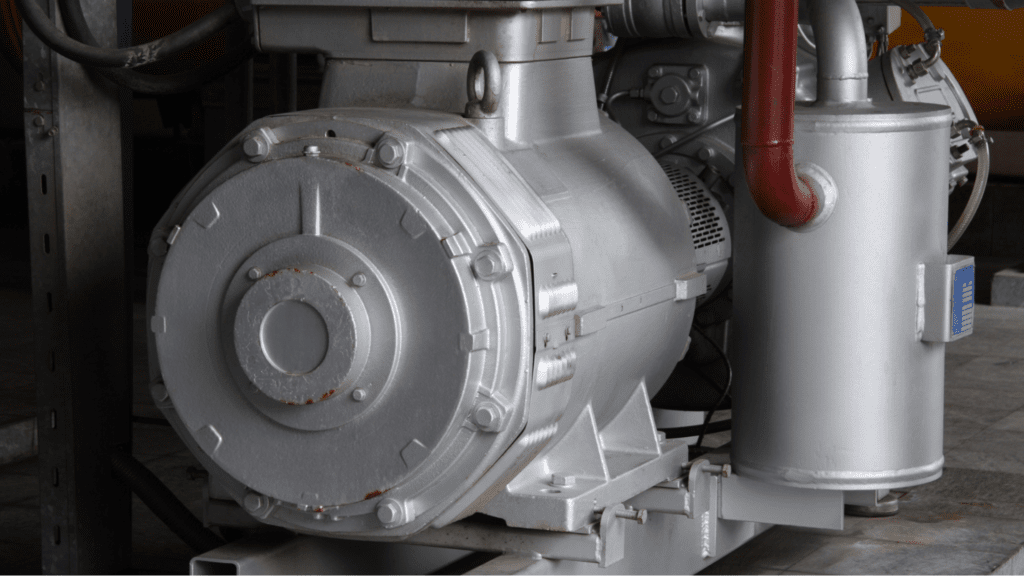
Electric motors are built to last, and many run for decades. But insulation materials have a finite lifespan, and older motors were manufactured with insulation classes that degrade faster than modern materials. A motor that has been running reliably for 15 or 20 years may be living on borrowed time, especially if it operates at or near full load in a warm environment.
Age alone is not a reason to rewind a motor, but age combined with any of the signs listed above is a strong signal. A proactive rewind on an aging motor — done during a planned shutdown — costs a fraction of what an emergency failure and rush repair would run.
Rewind vs. Replace: How to Decide
Not every motor that shows these signs needs a rewind. In some cases, replacement makes more sense. Here is a quick framework:
A rewind usually makes sense when:
- The motor is a large frame size (typically 50 HP and above) where replacement costs are high
- The motor is custom-built or has a long lead time for replacement
- The motor is relatively modern and energy-efficient
- This would be the first or second rewind
Replacement may be the better choice when:
- The motor has been rewound multiple times already
- The motor is undersized or oversized for its current application
- A newer, premium-efficiency motor would significantly reduce energy costs
- The motor is a standard frame size that is readily available
A qualified motor repair shop can test the motor and give you an honest recommendation. At IER Services, we inspect every motor that comes in and advise our customers on the most cost-effective path forward — whether that is a rewind, a repair, or a replacement.
What to Expect During a Professional Motor Rewind
A proper motor rewind is not just about replacing the wire. The process includes a thorough inspection of the stator, rotor, shaft, bearings, and housing. The old windings are removed, the core is cleaned and tested for damage, and new windings are installed using insulation materials matched to the motor’s operating conditions.
After rewinding, the motor goes through a series of tests: insulation resistance, winding resistance, high-potential (hi-pot) testing, and in many cases a no-load run test to verify proper operation. A quality rewind, done to EASA standards, restores the motor to its original performance specifications.
At IER Services in Columbus, Ohio, we handle everything from fractional horsepower motors to large industrial units. Our shop is equipped for precision rewinding, dynamic balancing, vibration analysis, and laser alignment — so when your motor leaves our facility, it is ready to run.
Do Not Wait for the Breakdown
The most expensive motor repair is the one you did not plan for. If you have noticed any of these warning signs in your facility’s motors, get them inspected sooner rather than later. A proactive approach protects your production schedule and your budget.
IER Services provides electric motor rewind and repair services for manufacturing plants, water treatment facilities, HVAC systems, and industrial operations across Columbus and central Ohio. We offer on-site field service for motors that cannot be easily removed, and we work with your maintenance schedule to minimize disruption.
Call IER Services at (614) 298-1600 or contact us online to schedule a motor inspection or get a quote on a rewind.