
Dynamic Balancing for Electric Motors: Why It Matters and When Your Equipment Needs It
Electric motors are the backbone of nearly every industrial operation in central Ohio — from manufacturing lines and HVAC systems to pumps, fans, and compressors. When one of those motors develops a vibration problem, the consequences ripple through your entire facility: premature bearing failure, increased energy costs, unexpected downtime, and repair bills that could have been avoided.
Dynamic balancing for electric motors is one of the most effective and often overlooked maintenance practices available. At IER Services in Columbus, OH, we see firsthand how a properly balanced motor outlasts, outperforms, and outpaces one that has been neglected. Here is what dynamic balancing is, why it matters, and how to know when your motors need it.
What Is Dynamic Balancing?
Every rotating component — whether it is a motor rotor, fan blade, or pump impeller — has mass distributed around its axis of rotation. When that mass is evenly distributed, the component spins smoothly. When it is not, the result is imbalance, which produces vibration during operation.
Static balancing addresses imbalance in a single plane, meaning it corrects for uneven weight distribution when the rotor is at rest. Dynamic balancing goes further. It identifies and corrects imbalance across multiple planes while the rotor is spinning at operating speed. This distinction matters because many imbalance conditions only reveal themselves during rotation, especially at higher RPMs.
During dynamic balancing, the rotor is mounted on a precision balancing machine that measures vibration at both ends of the shaft simultaneously. Technicians then add or remove small amounts of weight at specific locations until the rotor meets the required balance grade — typically ISO 1940 G2.5 or better for electric motors.
Why Dynamic Balancing Matters for Your Facility
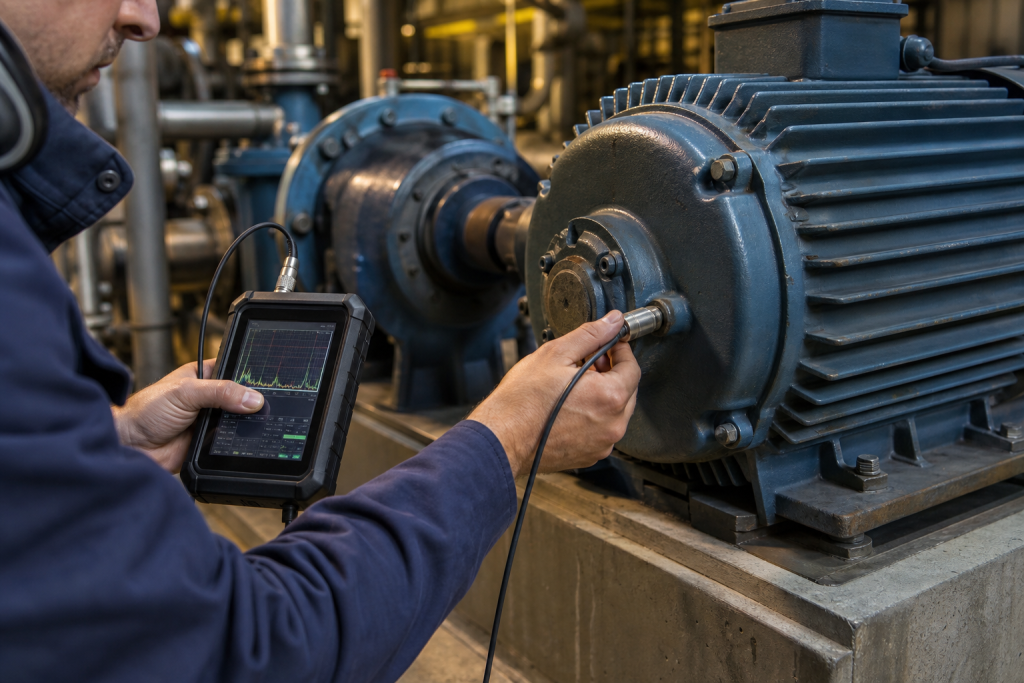
The forces generated by an unbalanced rotor increase dramatically with speed. Doubling the rotational speed of an imbalanced rotor produces four times the force on the bearings. Even a small imbalance — just one ounce on a rotor spinning at 3,600 RPM — can add more than 30 pounds of force to each bearing, every single revolution.
Over time, that extra force creates a chain reaction of problems:
- Premature bearing failure. Bearings are designed to handle specific load ratings. Imbalance-driven vibration pushes bearings beyond those limits, shortening their lifespan from years to months. If your facility is replacing bearings on the same motor repeatedly, imbalance is a likely culprit.
- Increased energy consumption. A motor fighting vibration works harder to maintain output. That wasted energy shows up directly on your utility bill. Facilities that invest in balancing routinely see measurable reductions in energy costs on high-runtime equipment.
- Accelerated wear on connected equipment. Vibration does not stay contained within the motor. It travels through couplings, shafts, and mounting hardware into adjacent machinery — gearboxes, pumps, and driven equipment all absorb that excess movement and wear faster as a result.
- Unplanned downtime. When an unbalanced motor finally fails, it rarely happens at a convenient time. Emergency repairs, expedited parts, and lost production during an unscheduled shutdown cost far more than a planned balancing service ever would.
Signs Your Electric Motor Needs Balancing
Not every vibration issue is a balancing problem, but many are. Here are the indicators that dynamic balancing should be on your maintenance radar:
Excessive vibration during operation. This is the most obvious sign. If you can feel vibration through the motor housing, the floor near the motor, or connected piping and ductwork, the rotor may be out of balance. A vibration analysis can confirm whether imbalance is the primary source.
Recurring bearing replacements. If your maintenance team is replacing bearings on the same motor more than once within a normal service interval, the root cause is often not the bearings themselves. Imbalance, misalignment, or a combination of both can destroy new bearings within months of installation.
Unusual noise patterns. A humming, rumbling, or rhythmic noise that changes with motor speed often points to a balance issue. This is different from the high-pitched squeal of a failing bearing or the electrical hum of a winding problem.
Visible shaft movement. On larger motors, you may be able to observe shaft runout or wobble during operation. Any visible movement at operating speed warrants immediate attention.
After a motor rewind. Any time a motor has been rewound, the rotor should be dynamically balanced before it goes back into service. The rewind process can shift weight distribution in the windings, and even small changes add up at operating speed.
When to Schedule Dynamic Balancing
- During scheduled maintenance shutdowns. If your facility runs planned shutdowns — whether annually, quarterly, or during slower production periods — balancing should be part of the checklist for critical motors. Central Ohio manufacturing plants that include balancing in their summer or winter shutdown maintenance consistently report fewer mid-season breakdowns.
- After any motor repair or rewind. Whenever a motor is disassembled for repair, the rotor should be balanced before reassembly. This includes rewinding, bearing replacement, shaft repair, and any work that involves removing the rotor from the housing.
- When vibration analysis flags an issue. If your facility uses predictive maintenance tools like vibration analysis, the data will tell you exactly which motors are developing balance problems before those problems become failures. Pairing vibration analysis with proactive balancing is one of the highest-return maintenance investments a plant can make.
- On new motor installations. Even new motors from the factory can benefit from a balance check, especially if they have been shipped long distances or if the driven equipment has specific vibration tolerance requirements.
In-Shop and On-Site Balancing: Which Approach Is Right?

At IER Services, we offer both in-shop and on-site dynamic balancing to fit different situations.
In-shop balancing is the most precise option. The rotor is removed and brought to our facility at 1608 Clara St in Columbus, where it is mounted on our balancing equipment for detailed correction. This approach is ideal during planned maintenance windows when the motor is already being serviced, rewound, or rebuilt.
On-site field balancing keeps your motor in place. Our technicians bring portable balancing equipment directly to your facility and balance the rotor while it remains installed. This approach eliminates transportation time and is often the right call for large motors that are difficult to move, for urgent situations where downtime must be minimized, or for fans, blowers, and pumps where removing the rotating element is impractical.
Both approaches follow ISO 1940 standards, and both deliver measurable results. The choice typically comes down to the size of the motor, the urgency of the situation, and whether other repairs are being performed at the same time.
Dynamic Balancing as Part of a Complete Maintenance Strategy
Balancing delivers the most value when it is part of a broader predictive maintenance program rather than a standalone fix. At IER Services, we recommend pairing dynamic balancing with:
- Vibration analysis to identify which motors need attention before they fail
- Laser alignment to ensure the motor and driven equipment are precisely aligned after balancing
- Bearing replacement with proper installation practices to maximize the lifespan of new bearings on a freshly balanced rotor
This combined approach addresses the root causes of motor failure rather than treating symptoms. Facilities across central Ohio that have adopted this strategy consistently see longer equipment life, lower maintenance costs, and fewer emergency calls.
Keep Your Motors Running Smoothly
Dynamic balancing is one of the most cost-effective ways to extend the life of your electric motors, reduce energy waste, and prevent the kind of unexpected failures that shut down production. Whether you need precision in-shop balancing during a planned maintenance window or rapid on-site service to address a vibration problem now, IER Services has the equipment, experience, and expertise to get your motors running smoothly.
Contact IER Services at (614) 298-1600 or visit ierservices.com to schedule a balancing service or request a quote. We serve manufacturing facilities, HVAC operations, water and wastewater plants, and industrial operations throughout Columbus and central Ohio.