
Summer shutdown electric motor maintenance is one of the most valuable investments a central Ohio plant can make all year. When production slows down during your scheduled summer downtime, you have a narrow window to address every motor, pump, and drive issue that has been quietly developing on the production floor. Miss that window, and you risk unplanned failures when operations ramp back up in the fall.
At IER Services in Columbus, Ohio, we work with manufacturing facilities, water treatment plants, food processing operations, and HVAC systems across central Ohio to make the most of every scheduled shutdown. This guide walks through how to plan your summer shutdown electric motor maintenance so your equipment comes back online stronger than it went down.
Why Summer Shutdowns Are the Best Time for Electric Motor Maintenance
Most industrial electric motors run continuously for months at a time. They accumulate heat stress, bearing wear, insulation degradation, and alignment drift that can be impossible to address while the line is running. Summer shutdowns give your maintenance team the time and access to perform work that would otherwise require an expensive, unplanned production stop.
The reality for central Ohio manufacturers is straightforward: equipment that gets inspected and serviced during a planned shutdown is far less likely to cause a surprise failure during peak production. A motor that develops a bearing issue during your busiest quarter could take an entire line down for days. The same bearing, caught during a summer inspection, can be replaced in hours with zero production impact.
Summer shutdowns also allow for more thorough diagnostic testing. Vibration analysis, insulation resistance testing, and thermal imaging all produce more accurate results when the motor can be fully de-energized and isolated. These tests reveal problems that are invisible during normal operation.
Building Your Summer Shutdown Motor Maintenance Checklist
A well-organized shutdown maintenance plan starts weeks before the plant goes quiet. Here is a practical checklist to guide your planning:
Before the Shutdown
- Inventory all critical motors, pumps, and drives on the floor. Identify which ones have logged the most runtime hours since their last service.
- Review maintenance records for any equipment that has tripped alarms, shown elevated temperature readings, or required temporary repairs during the past year.
- Order replacement bearings, seals, and other wear parts in advance. Lead times for specialty components can stretch to several weeks, and you do not want to lose shutdown days waiting on a shipment.
- Schedule your service provider early. Repair shops in the Columbus area fill their summer calendars fast, especially for on-site field service work.
During the Shutdown
- Perform visual inspections on every motor. Look for signs of overheating (discolored paint, melted wire insulation), oil or grease leaks, corrosion, and physical damage to housings or junction boxes.
- Test insulation resistance on motor windings. A megohmmeter reading that has dropped significantly since the last test is a clear warning that the winding is deteriorating and may need a rewind before the next production cycle.
- Check and replace bearings on any motor showing elevated vibration levels or audible noise. Bearing failure is the single most common cause of unplanned motor downtime in industrial settings.
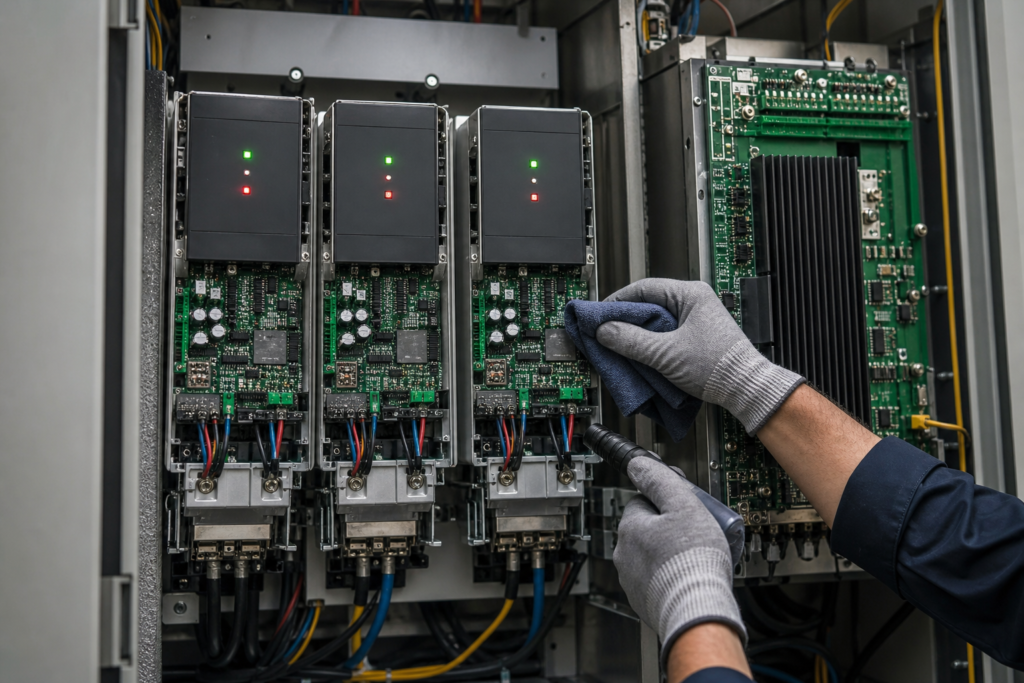
- Inspect and clean variable frequency drives (VFDs). Dust buildup on heat sinks and cooling fans is a leading cause of VFD faults. Verify that all parameter settings are correct and that firmware is current.
- Test pump mechanical seals and impellers for wear. A pump that is losing efficiency due to internal wear wastes energy every hour it runs and puts additional strain on the motor driving it.
- Verify shaft alignment on all motor-to-load connections using laser alignment tools. Even small misalignment causes accelerated bearing wear and increased energy consumption.
After the Shutdown
- Document every inspection, measurement, and repair performed. This data becomes the baseline for your next maintenance cycle and helps your team spot trends over time.
- Run each motor under load and monitor for abnormal vibration, noise, or temperature before returning the line to full production.
Common Problems Found During Summer Shutdown Inspections

After more than a decade of performing summer shutdown electric motor maintenance across central Ohio facilities, certain failure patterns come up again and again:
Insulation Breakdown
Motors that run in hot, humid, or chemically aggressive environments see accelerated insulation degradation. Ohio summers add heat and humidity that stress motor windings even further. If insulation resistance testing shows a consistent downward trend, a planned rewind during the shutdown is far better than an emergency rewind in October.
Bearing Wear and Contamination
Bearings are designed to be replaced at intervals, not run indefinitely. Contamination from dust, moisture, or process chemicals accelerates wear. During a shutdown, a skilled technician can assess bearing condition through vibration analysis and physical inspection, then replace any bearings that are approaching end of life.
VFD Cooling System Failures
Variable frequency drives generate significant heat during operation. When cooling fans fail or heat sinks become clogged with dust, the drive’s internal components overheat and degrade. A summer shutdown is the ideal time to clean VFD enclosures, replace worn fans, and test thermal protection circuits.
Shaft Misalignment
Thermal expansion, foundation settling, and normal vibration can all cause motor shafts to drift out of alignment with the equipment they drive. Misalignment increases energy consumption, accelerates bearing and coupling wear, and generates excessive vibration that can damage surrounding equipment. Laser alignment during a shutdown corrects the problem before it cascades.
Pump Wear
Centrifugal pumps in water and wastewater applications, food processing, and HVAC systems experience gradual impeller and seal wear. A pump that has lost even a small percentage of its efficiency is wasting energy and may be unable to maintain required flow rates when demand increases.
Predictive Maintenance Tools That Make Summer Shutdowns More Effective
Shutting down and inspecting every motor on the floor takes time. Predictive maintenance tools help your team prioritize which equipment needs the most attention, so you can focus your shutdown hours where they matter most.
Vibration Analysis
Vibration monitoring detects bearing defects, imbalance, misalignment, and looseness long before these problems cause a failure. If your facility has been collecting vibration data during normal operation, your shutdown maintenance team can use that data to target the motors and pumps that need immediate attention. If you have not started a vibration monitoring program, a baseline vibration survey during the shutdown gives you a reference point for the year ahead.
Thermal Imaging
Infrared thermal imaging identifies hot spots in electrical connections, motor housings, and VFD enclosures that indicate developing faults. Thermal scans performed during pre-shutdown operation can flag equipment that should be prioritized for repair during the downtime window.
Dynamic Balancing
Rotating equipment that is out of balance generates excessive vibration, noise, and bearing stress. Dynamic balancing during a shutdown corrects imbalance in motor rotors, pump impellers, and fan assemblies, extending equipment life and reducing energy consumption.
These diagnostic tools do not replace hands-on inspection and repair. They make the inspection process smarter by directing your team’s time toward the equipment that is most at risk.
Planning Your Shutdown Timeline: How Far Ahead Should You Start?
The most successful summer shutdowns we see at central Ohio plants follow a timeline that starts well before the first motor is powered down:
8 to 10 weeks out: Identify critical equipment and review maintenance history. Begin ordering long-lead-time parts.
6 weeks out: Schedule your external service provider for on-site field service and any shop repairs that will require equipment removal.
4 weeks out: Finalize your shutdown maintenance plan. Assign tasks to internal maintenance staff and confirm dates with outside contractors.
2 weeks out: Verify that all parts, tools, and documentation are on-site. Conduct pre-shutdown vibration and thermal surveys to identify last-minute additions to the work list.
Shutdown week: Execute the plan. Perform inspections, testing, and repairs in priority order. Document everything.
Post-shutdown: Run equipment under monitored conditions before returning to full production. File all records for future reference.
Starting early is especially important for central Ohio manufacturers that rely on on-site field service. Columbus-area repair shops and field service teams book up during the summer months, and facilities that wait until the last minute may find themselves competing for limited availability.
When to Repair In-House vs. When to Call a Professional
Some shutdown maintenance tasks are well within the capability of a skilled in-house maintenance team: cleaning, visual inspections, lubrication, and basic electrical testing. Other tasks require specialized equipment, training, and experience.
Consider bringing in a professional electric motor repair shop when the work involves:
- Motor rewinding or winding repair
- Precision laser shaft alignment
- Vibration analysis and dynamic balancing
- VFD troubleshooting, repair, or parameter optimization
- Large motor disassembly and bearing replacement
- Pump rebuild or mechanical seal replacement
- Any repair on a motor rated above 100 HP
A qualified repair shop can also perform work at your facility. On-site field service eliminates the cost and downtime of transporting large motors to a shop and back. For central Ohio plants, having a local service provider who can respond quickly — including for emergency situations — is a significant advantage over shipping equipment to a distant facility.
Make This Summer Shutdown Count
Every central Ohio plant manager knows that a well-executed summer shutdown sets the tone for the rest of the year. The motors, pumps, and drives that come out of shutdown properly inspected, repaired, and documented are the ones that run reliably through fall and winter production cycles.
If your facility is planning a summer shutdown and you need experienced support for electric motor maintenance, pump repair, VFD service, or predictive maintenance testing, IER Services is here to help. We have been serving Columbus and central Ohio manufacturers since 2011, and our team handles everything from single motor inspections to full-plant shutdown maintenance programs.
Call us at (614) 298-1600 or visit ierservices.com to schedule your summer shutdown maintenance. The earlier you plan, the smoother your shutdown runs.