

Electrical control panel fabrication turns a list of motors, pumps and sensors into one enclosure that runs your process. If you manage a plant or facility in Columbus or central Ohio, a custom panel can replace a mix of old starters, relays and hand switches with an automation you can see and run from one place. This guide shows how IER Services builds a custom control system panel, what each stage covers, and what you should have ready before you call.
Who this guide is for: plant engineers, maintenance managers and facility managers planning a new control panel or replacing an outdated one.
What a Custom Control Panel Does
A control panel is an electrical enclosure that houses the devices that start, stop, protect and monitor your equipment. A custom panel is built around your equipment instead of a catalog part number. IER designs panels that bring several kinds of control hardware into one cabinet:
- PLC (programmable logic controller): the small industrial computer that runs your control logic.
- HMI (human machine interface): the touchscreen or display your operators use to start equipment, change setpoints and read alarms.
- VFD (variable frequency drive): the device that controls motor speed. IER installs and services drives and is an authorized distributor for Mitsubishi Drives.
- Sensors and field devices: pressure, level, flow and temperature inputs that tell the PLC what is happening.
When these parts share one panel, your team has one place to troubleshoot and one set of drawings to maintain.
Electrical Control Panel Fabrication, Step by Step
IER works with you from design through installation. Every project is different, but most panel builds follow the same five stages.
| Stage | What happens | What you provide |
|---|---|---|
| 1. Scope | Define the equipment, voltages, I/O count and how operators will use the panel | Motor nameplates, a short sequence of operation, site photos |
| 2. Design | Lay out the enclosure, select components and draw the wiring schematics | Approval of drawings and component choices |
| 3. Fabrication | Mount the backplate, wire devices, label conductors and terminals in the shop | Answers to any open questions |
| 4. Testing | Power up the panel, check wiring point to point and run the control logic | Sign off on test results |
| 5. Installation | Set the panel, land field wiring and start up equipment at your site | Access to the site and a shutdown window |
Scope and design
Choices made at this stage shape how well the panel is going to serve you for years. The engineer counts every input and output, and then sizes the enclosure with room for future additions and picks components your maintenance team can source. If your plant already runs a certain PLC or drive family, say so early in the process. Matching your existing hardware keeps spare parts and training simple.
Fabrication in the shop
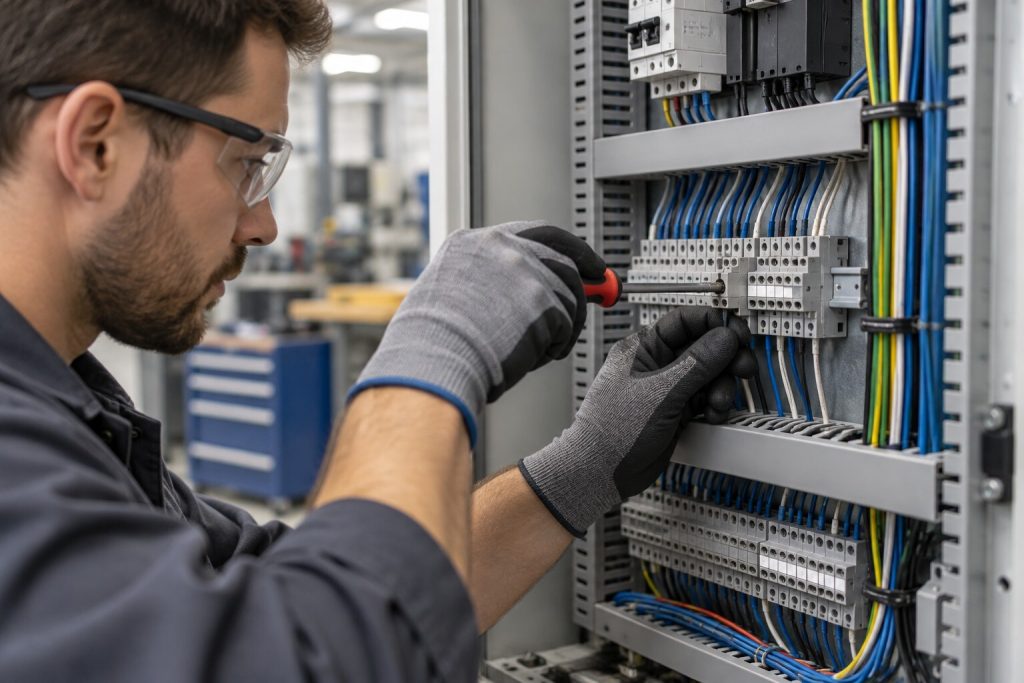
Shop fabrication is where the drawings become hardware. Components mount to a backplate, wire runs through duct and every conductor and terminal gets a label that matches the schematic. Building in a shop instead of on your floor keeps the work clean and keeps your production area clear.
Testing before it ships
A panel should be tested before it reaches your site. Point-to-point checks confirm each wire lands where the drawing says. Powered tests confirm the control logic does what you expect. Problems found in the shop cost far less time than problems found during startup.
Standards Your Panel Should Meet
Quality in electrical control panel fabrication starts with the codes and standards that apply to your equipment. Ask about these before you approve the drawings:
- NFPA 70, the National Electrical Code: Article 409 covers industrial control panels and requires the panel to be marked with its short-circuit current rating (SCCR).
- UL 508A: the UL standard for building industrial control panels. Some inspectors, insurers and corporate engineering groups require a UL 508A listing label.
- NFPA 79: the electrical standard for industrial machinery, which applies when the panel controls a machine.
Your local inspector and your company’s engineering standards decide which of these apply to your project. Confirm the requirements in writing before fabrication starts so the panel passes inspection the first time.

What to Have Ready Before You Request a Quote
A complete request saves time and lets the shop give you an accurate scope on the first pass. Gather these items before you call:
- Equipment list: every motor, pump and valve the panel will control, with nameplate horsepower, voltage and full load amps.
- Power details: incoming service voltage, phase and the available fault current if your electrician has it.
- Control description: a plain-language explanation of how the equipment should run, including start and stop conditions and alarms.
- Location: indoor or outdoor, wet or dusty, and how much wall or floor space you have. This drives the enclosure rating.
- Existing hardware: the PLC, HMI and drive brands your plant already uses.
- Drawings and photos: any old schematics plus photos of the current panel and the install area.
Missing items are fine. They become questions for the engineer instead of surprises during startup.
How to Choose a Control Panel Shop
The right shop for your panel depends on your equipment and how much support you need after startup. Ask each shop these questions:
- Do you design, fabricate and install, or only one of those?
- Which standards will the panel be built to, and will it carry an SCCR marking?
- Will I receive a full set of as-built drawings and the PLC program?
- Who do I call if the panel faults at 2 a.m.?
Figure out that last question before you sign anything. IER offers 24/7 emergency service with live operators, and the same team repairs motors, pumps and drives. If a panel controls VFDs, our guide to VFD installation for Columbus facilities explains what to plan for on the drive side.
Support after startup
A panel needs care like any other equipment. Plan for these tasks once your panel is running:
- Check terminal tightness and look for heat discoloration during scheduled shutdowns.
- Keep enclosure filters and cooling fans clean, since VFDs and power supplies are sensitive to heat.
- Store a backup copy of the PLC and HMI programs off site.
- Update the drawings whenever someone changes the wiring.
IER’s preventive maintenance service can keep your motors and pumps on a regular inspection schedule.
Frequently Asked Questions
What is electrical control panel fabrication?
It is the process of designing, assembling, wiring and testing an enclosure that holds the controls for your equipment, such as PLCs, HMIs, VFDs, starters and sensors.
Do you build custom electrical control panels for industrial equipment?
Yes, we design and build custom control system panels, which are tailor made electrical enclosures that house all the components needed to automate an industrial process. These panels integrate devices and sensors into one compact, centralized system so your equipment can be controlled and monitored efficiently. Whether you need a new panel built for a specific application or support integrating one into your existing setup, our team can help plan and fabricate a solution that fits your operation. This service pairs well with our motor, pump, and VFD work since control panels often tie all three together. Call us at (614) 298-1600 to talk through what your facility needs.
Can a new panel work with my existing PLC or drives?
In most cases, yes. Tell the panel builder which PLC, HMI and drive brands your plant uses so the new panel matches your spare parts and your team’s training.
What is an SCCR, and why does my panel need one?
SCCR stands for short-circuit current rating. It is the highest fault current the panel can safely handle. Article 409 of the National Electrical Code requires industrial control panels to be marked with it.
How long does a custom control panel take?
It depends on the size of the panel and the lead time for parts like PLCs and drives. Ask for a schedule with your quote, and share your shutdown window early so installation can be planned around it.
Who services the panel if it fails?
IER offers 24/7 emergency service with live operators for motors, pumps and drives. Call (614) 298-1600 to talk through support for your panel
Plan Your Control Panel Project With IER
A well-built panel gives your team one place to run, monitor and troubleshoot your equipment. If you are planning electrical control panel fabrication for a plant or facility in central Ohio, call IER Services at (614) 298-1600 or request service online. Bring your equipment list and a short description of how the equipment should run, and the team will help you scope the panel from there.