
An electric motor rewind replaces the failed copper windings inside a motor so it can go back into service. We rewind industrial electric motors at our Clara Street shop in Columbus. If you manage a plant or facility in Columbus or central Ohio, knowing how a rewind works helps you plan out the downtime and send the right information with the motor. You’ll also know how to judge the quality of the work when the motor comes back to you.
Who this guide is for: plant managers and maintenance leads who are sending a motor out for a rewind.
If you’re still deciding whether your motor needs a rewind at all, start with our post on the 7 signs your electric motor needs a rewind.
What an Electric Motor Rewind Replaces
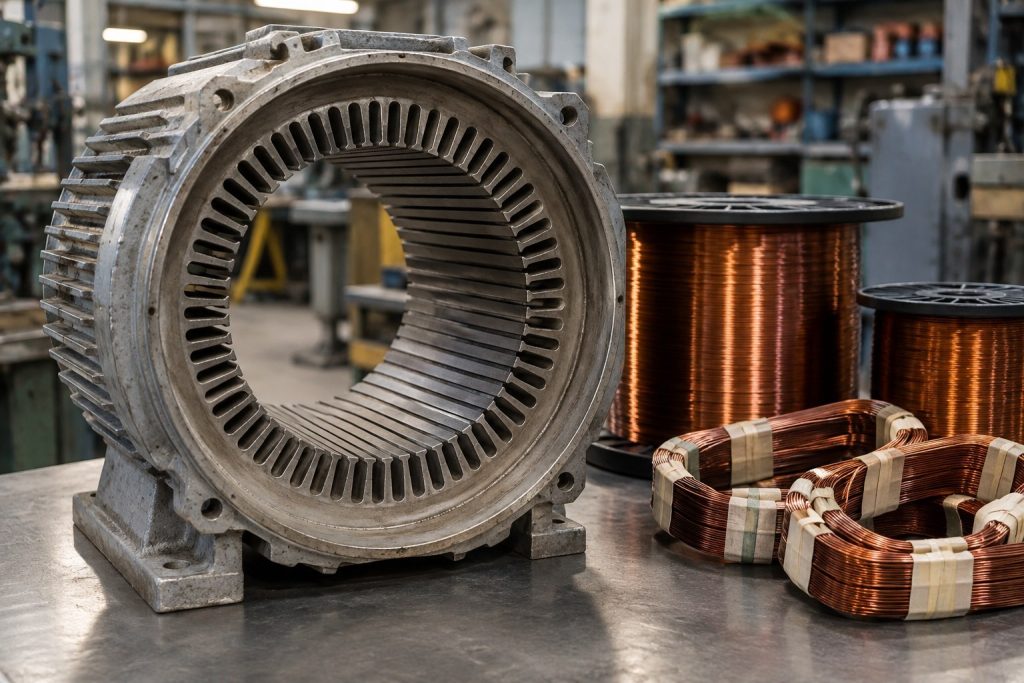
The stator is the stationary part of the motor. It’s a stack of thin steel laminations with slots along the inside, and copper coils sit in those slots. Insulation keeps each coil separated from the steel and from the other coils. When that insulation breaks down from heat, moisture, dirt or age, the winding can short or ground out, and then the motor stops running.
Motor rewinding removes the damaged coils and replaces them with new ones. In most cases the steel core, frame, shaft and rotor stay with the motor, although each part does get inspected during the job.

The Rewind Process, Step by Step
Most rewind shops follow the same basic sequence. The ANSI/EASA AR100 recommended practice sets out guidelines for each of these steps.
- Inspection and testing. A technician records the nameplate data, runs electrical tests on the winding and checks the bearings, shaft and housing. This confirms that the winding is the problem and finds any mechanical damage before work starts.
- Recording the winding data. Before the old coils come out, the technician writes down the number of turns, wire size, coil pitch and connection pattern. These details guide the new winding.
- Stripping the old winding. Old coils are cut out and the core is cleaned. EASA’s guidance on maintaining efficiency during a rebuild calls for controlling core temperature during this step, because too much heat can damage the laminations.
- Core testing. A core loss test checks the laminations for hot spots. Testing before and after stripping shows whether the core is still in good condition.
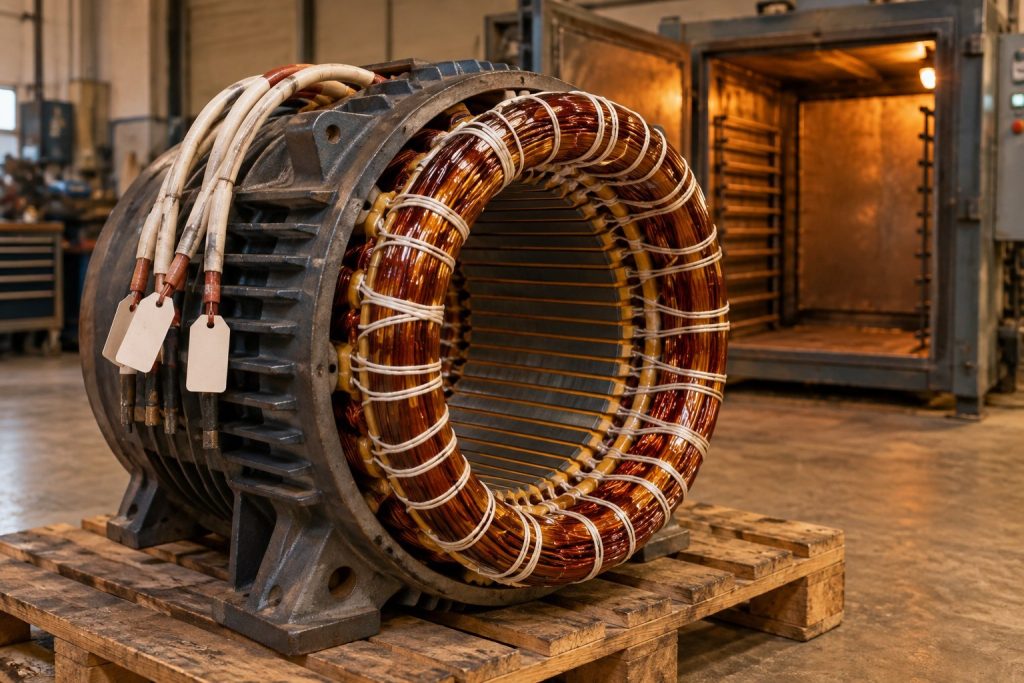
- Rewinding. New slot insulation goes in, and new coils are placed, connected and laced.
- Varnish and cure. Properly cured varnish or resin locks the coils in place and seals out moisture and dirt.
- Final testing. After reassembly, the motor is tested again before it ships back to you.
Does a Rewind Lower Motor Efficiency?
A careful rewind doesn’t have to. A joint study by EASA and the AEMT found that motors rewound with good practice methods kept their original efficiency, and a later round of tests on premium efficiency motors reached the same conclusion. Losses usually come from shortcuts, such as overheating the core during stripping or changing the winding design without having a reason.
What to Send With the Motor
Your notes save time and help us find the root cause of the failure. Send as much of this as you have.
| What to send | Why it helps |
|---|---|
| Nameplate photo | Confirms horsepower, voltage, speed and frame size before the motor is opened |
| What happened when it failed | Tripping, a burning smell, noise or smoke each point to different causes |
| Recent test readings | Insulation resistance trends show how quickly the winding wore down |
| What the motor drives and how often it runs | Duty and load show whether the motor fits the job |
| The operating environment | Washdown, dust or heat can change the varnish and material choices |
| Service history | Past rewinds and bearing jobs help us judge the core and the shaft |
If the motor has had repeated bearing problems, mention that too. Our post on electric motor bearing failure covers the common causes.
What Affects Motor Rewinding Cost and Downtime
Every rewind gets its own quote, because several factors change the scope of the job:
- Size and voltage. Larger motors and higher voltage windings take more material and more labor.
- Winding type. Form-wound coils, common in larger and medium voltage motors, usually take more labor than random-wound coils.
- Extra damage. A damaged core, worn shaft or bad bearing adds work on top of the winding.
- Parts and materials. Specialty wire or bearings can add lead time.
You can plan around most of the downtime. If megger readings keep dropping or vibration analysis points to an electrical problem, schedule the rewind during a planned shutdown. For critical equipment, we keep large replacement motors in stock for same-day replacement, so you can swap in a motor and keep running while yours is being rewound. We’re also a distributor for WorldWide Motors if you’d rather keep a spare on the shelf. Learn more about our motor repair and replacement services.
Frequently Asked Questions
What is an electric motor rewind?
It’s a job that removes the failed copper windings from a motor and replaces them with new coils and new insulation. In most cases the core, frame, shaft and rotor stay in service.
Will a rewound motor be as efficient as it was before?
It can be. The EASA and AEMT rewind studies found that motors rewound with good practice methods kept their original efficiency. You can ask how core temperature is controlled and whether the core is tested.
What should I send with a motor that needs a rewind?
Send a nameplate photo, a short description of the failure, any recent test readings, what the motor drives and its service history.
Can I keep my line running while my motor is being rewound?
Yes, if you have a spare or a replacement. We keep large replacement motors in stock for same-day replacement.
Where can I get an electric motor rewind near me in Columbus?
IER Services is at 1608 Clara St in Columbus and serves central Ohio. Call (614) 298-1600 to talk about a rewind or an emergency.
Get Your Motor Back in Service
Planning your next electric motor rewind ahead of time protects your production schedule and cuts unplanned downtime. If a motor fails, call us at (614) 298-1600 for 24/7 emergency service, or email info@ierservices.com. To plan a rewind during scheduled downtime, get in touch online and we’ll help you get your equipment back in service.